Transforming Land and Livelihoods

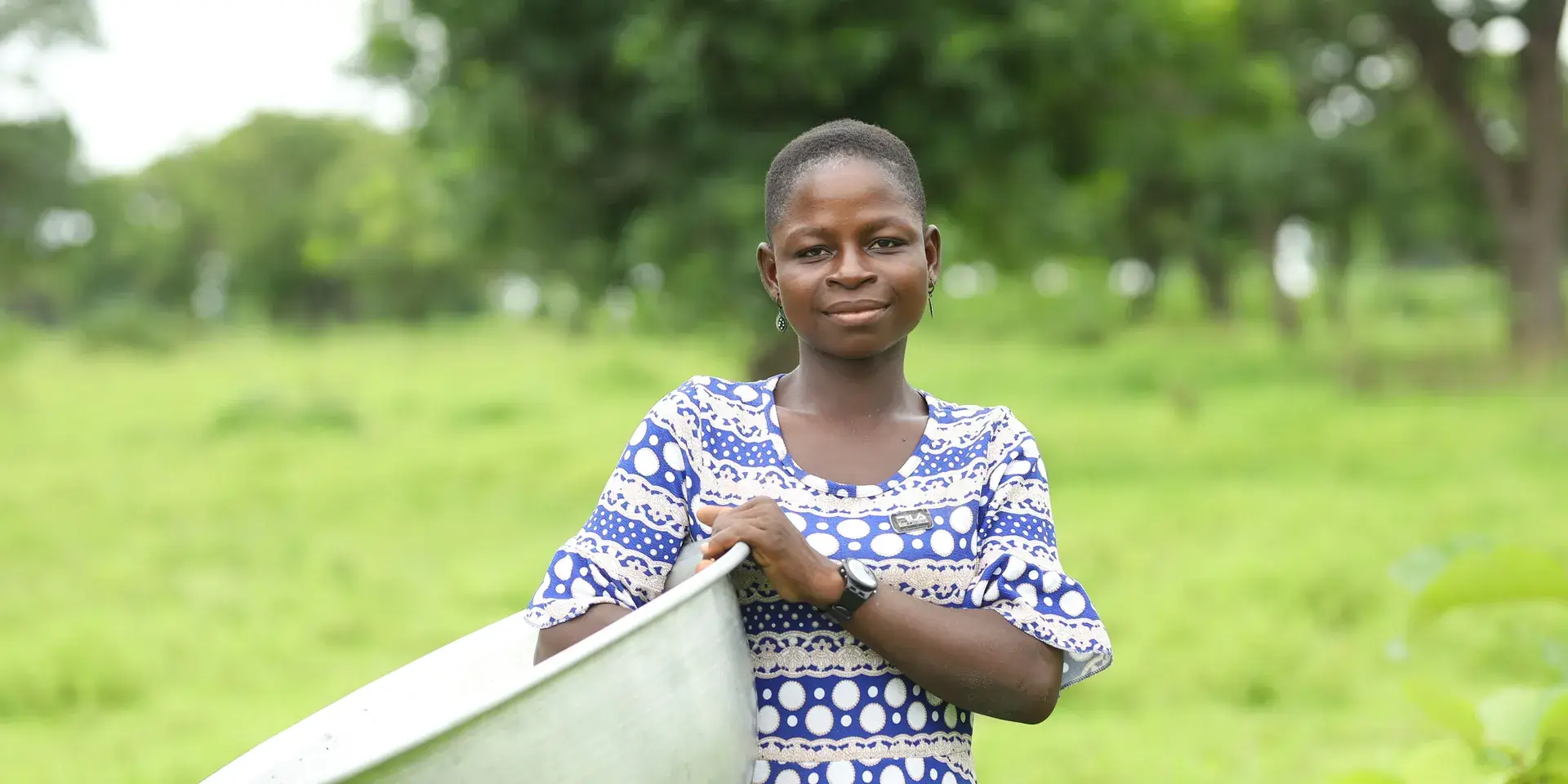
This four-year project took place in Northern Ghana and addressed low agricultural productivity, food insecurity, employment opportunities and social protection schemes.

We partnered with a number of civil society organisations who led project implementation.

Why this project matters

The project was designed to address three main issues:  

  • Low agricultural productivity and food insecurity  
  • Limited sustainable employment opportunities in the agricultural sector  
  • Inadequate social protection schemes

In the northern regions of Ghana, over half of the population live in poverty and rely on farmland for food and income. But the climate crisis is making rainfall unpredictable and drought and floods are becoming more frequent and severe.  

Soil that was once fertile is no longer able to support life. This means that many people are facing hunger and poverty.  

Our Aims

  • Increase smallholder farmers’ resilience to the impact of climate change through sustainable agricultural practices and contribute to the green economy 
  • Increase income levels for women and young people from non-timber forest products 
  • Increase access to quality social protection schemes for people living in poverty in rural agrarian areas

825,00

people reached in
15 districts and 3 regions

1,050

Civil society organisations
and group leaders trained

13,500

marginalised women, young people
and people with disabilities empowered

How did we achieve this?

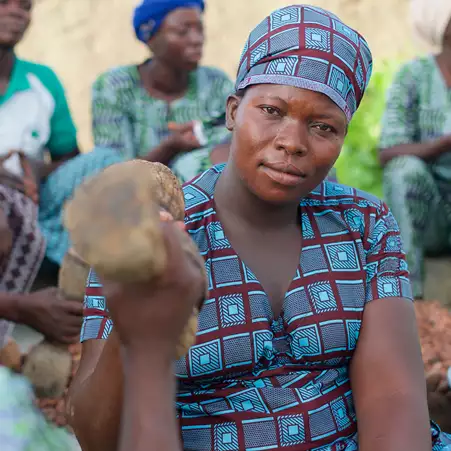
 Farmers learned sustainable agriculture techniques and developed climate adaption plans to help tackle the effects of the climate crisis. Women’s farmer groups were supported with access to social protection schemes like savings groups and disaster relief funds.

We did this by:

    • Providing advocacy training and financial support for CSOs and local movements.
    • Supporting women’s groups and networks to provide training to smallholder farmers, such as composting and planting techniques. At least 12,000 women smallholder farmers will be reached.

What are Civil Society Organisations (CSOs) and why are they important?

Civil society organizations (CSOs) play a vital role implementing projects, and holding governments to account for their policies. They engage in advocacy and offer alternative policies for government, and other institutions.

As set out in our new strategy, we cannot achieve all of our goals without joining forces – so we must collaborate with a wide range of like-minded organisations.

On this project, CSOs are helping deliver sustainable agriculture practices and policies, and support poor, rural communities to improve access to social protection and decent work.

What do we want to achieve with CSOs?

  • Build the capacity of Civil Society Organisation (CSOs) in 15 districts of Ghana.  
  • Support CSOs to lead community advocacy initiatives and support the formation of farmers networks to provide peer-led agricultural learning 
  • Integrate ‘decent work’ principles into agricultural programmes and policies, focusing particularly on women’s needs

What progress are we making?

CSO Training and support:

  • 30 action plans developed, and 15 CSOs funded for climate change, advocacy and social protection projects 
  • 900 Female Extension Volunteers trained – now sharing their training with 11,000+ farmers
  • Demonstration farms & learning centres established in 40 project communities – a hub for knowledge exchange and agricultural training

Climate-smart agriculture:

  • Research conducted in all districts & Climate Action Plans developed 
  • Agroforestry training provided to 80 women’s groups, and 28,000 fruit tree seedlings provided

Enterprise development and social protection:

  • 3 month fellowship programme set up for 1,500 people including people living with disabilities: and support provided to start up small scale businesses like honey and shea
  • 141 communities reached with education on social protection schemes
  • Village Loans and Savings Associations (VSLAs) established for 41 women’s groups. These groups were supplied with business kits, including saving boxes, record books and stationery

Health and wellbeing:

  • Tree Aid collaborated with Ghana Health Service (GHS) to carry out education on Sexual Reproductive Health and Rights for women and young people in all 80 communities

Real stories from

Read some inspiring stories of people from Ghana who participated in TreeAid projects. 

Our partners

Tree Aid's other work in

more ABout Tree Aid