Protecting and Restoring Dosso
Tree Aid worked in the Dosso region of Niger to restore and protect the diverse ecosystem in Niger's Park W, while also tackling poverty.
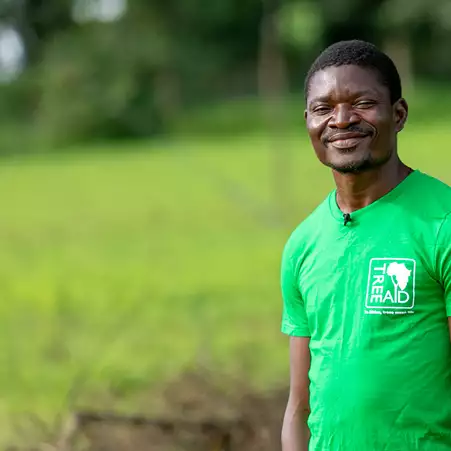
The project provided local people with skills and tools they need to restore land an earn an income from tree products.
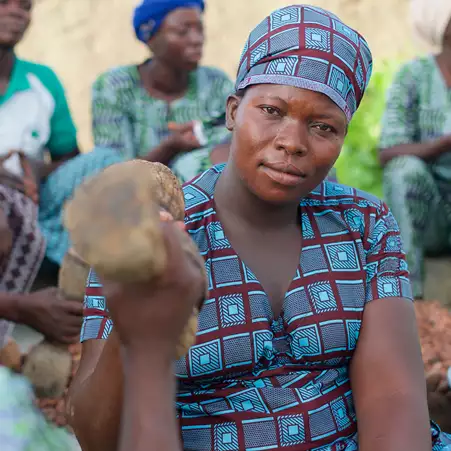
With gender inequality still a major issue, the project focused on empowering women to increase their access to land and trees, and with it their ability to grow businesses.
350
farmers trained to
restore the land
60,000
trees grown in
tree nurseries
10
new enterprise
groups established
Why is this project needed?
Niger is one of the world’s poorest countries where almost three-quarters of the population live in extreme poverty. Gender inequality is still a huge issue in Niger and women have limited access to the land and trees that they depend on for food and income.
Niger’s Park W is home to a vast array of wildlife. But as more trees are cleared to make room for farms, animals are being forced out of their homes and into local villages. Here, people’s crops and homes are at risk of being damaged by displaced wildlife – this is known as human-wildlife conflict.
Our Aims
The project aims to train farmers in the Dosso region of Park W to grow trees in tree nurseries and restore and protect the land. This will improve soil fertility, increasing crop productivity, and strengthening the community’s resilience to the impacts of the climate crisis.
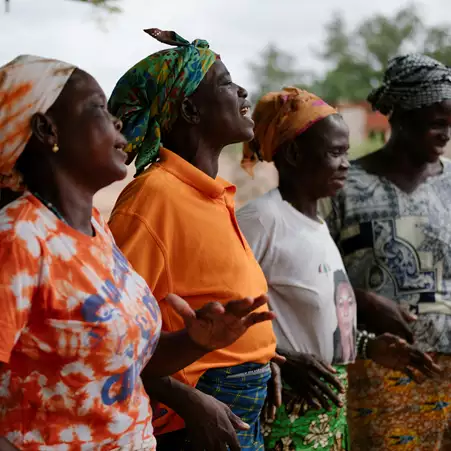
The project also focuses on increasing female representation in land commissions. We are also supporting 250 people — mostly women — to develop enterprises and earn money from tree products like fruits and nuts.
Planting a tree can make a huge difference for both planet and people and help create sustainable communities. We are therefore very pleased to support Tree Aid and their work in Dosso, Niger, an area affected by deforestation, land degradation and harsh living conditions.
Marie Dahllöf, Secretary General, The Swedish Postcode Foundation
Our Impact
In the first six months of this project, 50 farmers have been trained to restore the land and trees. These farmers have also set up action plans to train up 300 more farmers. Three tree nurseries have been created and used by locals to grow 22,390 tree seedlings.
We have also started working with ten enterprise groups, with 90% female members. 11 land commissions have also been assessed and we are now starting to improve the functionality and capacity of these groups
Our partners